Community Guide — Queens, NY

The Best Queens Neighborhoods for
South Asian & Immigrant Families

A community-by-community guide for families from South Asia, the Caribbean, South America, and beyond looking to put down roots in Queens, NY. Covering culture, transit, home prices, schools, and what life actually feels like in each neighborhood — written by someone who knows these streets.

Richmond Hill & South Ozone Park Jackson Heights Ozone Park Jamaica Flushing Woodside Multi-Generational Buying
138+ Languages Spoken in Queens
2.4M Residents in Queens Borough
$490K Entry-Level Home Price
7+ Major Subway Lines Serving Queens
Why Queens?

Queens Is Not Just Convenient — It Feels Like Home

There is no other borough in New York City — and arguably no other place in America — where South Asian, Caribbean, and immigrant families find such deep community infrastructure from the moment they arrive. Not just a few restaurants and a grocery store. We are talking about gurdwaras, mandirs, mosques, temples, sweet shops, sari stores, butchers who know exactly what you need, and neighbors who speak your language. Queens is where families from Punjab, Gujarat, Sylhet, Guyana, Trinidad, Colombia, and Korea all own homes, run businesses, raise children, and build wealth. This guide will walk you through every major neighborhood so you can find the one that feels right for your family.

Neighborhood 01

Richmond Hill & South Ozone Park

The Heart of Indo-Caribbean Queens — "Little Guyana"

If you have family from Guyana or Trinidad, there is a good chance someone you know already lives in Richmond Hill. This is one of the largest Indo-Guyanese and Indo-Trinidadian communities in all of North America — a living, breathing continuation of the culture that flourished across the Caribbean for generations. Walk down Liberty Avenue on a Saturday morning and you will hear Hindi-Creole conversations mixing with the smell of dhal puri and doubles frying at the corner stalls.

Liberty Avenue is the commercial spine of the neighborhood. Here you will find Caribbean and Indian grocers — including Subzi Mandi and its neighbors stocked with fresh karela, aloo, and every variety of dhal you could want. Sari shops, jewelry stores, sweet shops carrying gulab jamun, barfi, and peda sit alongside roti shops, halal butchers, and Punjabi dhabas. It is a place where you can handle most of your weekly shopping, a religious errand, and a meal out — all within six blocks.

The Sikh community has a significant presence here, anchored by the Gurdwara Sahib on 101st Avenue — one of the most active gurdwaras in New York City. The Hindu community is equally strong, with multiple mandirs serving devotees throughout the area. The Muslim community is well-represented through mosques along the Liberty Avenue and 101st Avenue corridors. Richmond Hill is, in the most genuine sense, a religiously pluralistic South Asian community.

For families who want to live among people who share their background and values — who will recognize the holidays you celebrate, who stock the groceries you grew up eating, and where children grow up in a community that mirrors their home culture — Richmond Hill is the place. Multi-family homes are abundant here, and many families leverage the rental income from a second or third floor unit to make homeownership more affordable. There is also a genuine sense of neighborhood stability here: families put down roots and stay for generations.

Indo-Guyanese Indo-Trinidadian Punjabi Bangladeshi Pakistani Sikh Hindu Muslim
Neighborhood 02

Ozone Park

Established Community, Strong Value, Strong Roots

Ozone Park is where South Asian and Caribbean families have been putting down roots for decades. The neighborhood shares much of the same cultural DNA as Richmond Hill — the same grocers, the same sweet shops, the same religious institutions — but extends into slightly quieter, more residential blocks that many families prefer for raising children. The pace here is a notch calmer than Liberty Avenue on a weekend.

The 101st Avenue and Lefferts Boulevard corridor has a strong South Asian and Caribbean commercial presence: Bangladeshi, Indian, Pakistani, Guyanese, and Trinidadian restaurants and grocery stores serve the community's daily needs without requiring a trip into Manhattan or a longer commute. Masjid Hamza serves the Muslim South Asian community, and the Hindu and Sikh community institutions from neighboring Richmond Hill are within easy reach.

One of Ozone Park's most underappreciated features is its proximity to JFK International Airport. For families that travel frequently — back to Guyana, Trinidad, India, Bangladesh, or Pakistan — living 10–15 minutes from an international terminal is a meaningful quality-of-life benefit. Parents can receive arriving family members easily. Families with children in two countries can manage the logistics more gracefully.

Multi-family homes are plentiful here and represent an outstanding opportunity for families who want to generate rental income to offset mortgage costs. A second unit in Ozone Park typically rents for $2,000–$2,800 per month — income that meaningfully reduces the out-of-pocket cost of homeownership. Ozone Park offers genuine value compared to more expensive Queens neighborhoods while keeping you close to the cultural community that matters most.

Bangladeshi Indian Guyanese Pakistani Trinidadian Punjabi
Neighborhood 03

Jackson Heights

The Most Diverse Square Mile on Earth

Jackson Heights holds a distinction that is not marketing — it has been officially recognized by researchers and journalists as one of the most ethnically diverse urban areas on the planet. More than 160 languages are spoken within a few square miles. For a family arriving from South Asia or the Caribbean, that diversity is not just interesting — it means you will always find community, grocery stores that carry what you need, and neighbors who understand where you are coming from.

74th Street — "Little India" — is the commercial and cultural anchor of South Asian Queens. Walk from Roosevelt Avenue south toward 37th Avenue and you will pass Indian and Pakistani jewelry shops selling 22K gold bangles, sari stores with fabric shipped fresh from Surat and Lahore, Bangladeshi and Nepali restaurants with lunch specials that will remind you of home, sweet shops with freshly made mithai, and grocery stores carrying fresh methi, mustard greens, fresh turmeric, and every variety of lentil available.

The Muslim community in Jackson Heights is particularly well-served. Masjid Al-Ittihad is one of the most established mosques in Queens, and several smaller mosques serve the Bangladeshi, Pakistani, and South Asian Muslim community in the neighborhood. The Sikh and Hindu communities are also present, with gurdwaras and mandirs accessible from the neighborhood. A growing Tibetan and Himalayan Buddhist community adds to the religious diversity.

Beyond South Asia, Jackson Heights has large Ecuadorian, Colombian, Mexican, Filipino, and Tibetan communities — making it one of the few places in the world where your children can grow up with genuinely global friendships and a deep understanding of multiple cultures. The neighborhood is also served by some of the best public transit in Queens — the 7, E, F, M, and R trains all pass through Jackson Heights–Roosevelt Avenue, giving residents multiple routes to Midtown Manhattan in 25–30 minutes.

South Asian Bangladeshi Pakistani Nepali Ecuadorian Colombian Tibetan Filipino
Neighborhood 04

Jamaica

Fast-Growing, High Value, Strong Appreciation

Jamaica is the most affordable entry point in Queens for families who want to own a home in a strong community without stretching beyond their means. Home prices here are among the lowest in Queens, but that gap is closing — Jamaica has seen strong year-over-year appreciation (roughly 6.3% YOY) as more buyers recognize its value relative to surrounding neighborhoods.

The Caribbean community in Jamaica is deep and established. Jamaican, Guyanese, Haitian, and Trinidadian families have lived here for generations, and the neighborhood has the cultural infrastructure to match: Caribbean restaurants, halal butchers, South Asian grocery stores, and a network of active religious institutions. Bangladeshi and South Asian families have been joining this community in growing numbers, and the neighborhood is becoming increasingly diverse in the South Asian sense as well.

Jamaica's transit infrastructure is exceptional — arguably the best in Queens for multi-modal travel. The E, J, and Z trains all converge here. The Long Island Rail Road serves Jamaica Station with service to Manhattan Penn Station in about 20–25 minutes. The JFK AirTrain connects Jamaica to the airport in minutes. For families who need to travel internationally or commute across the metro area, this transit hub is a major practical advantage.

For families interested in multi-generational homeownership, Jamaica is particularly well-suited. Two-family homes are common and relatively affordable here. Parents and adult children frequently purchase together — grandparents in one unit, the younger family in another — and the rental income potential is real. Jamaica is one of the few remaining Queens neighborhoods where a family with a realistic budget can buy a two-family home, generate rental income, and build equity from year one.

Jamaican Guyanese Haitian Bangladeshi South Asian Trinidadian
Neighborhood 05

Flushing

The Asian Capital of Queens — World-Class Food, Excellent Schools

Flushing's Chinese-speaking community is the largest outside of China and Taiwan in the entire Western Hemisphere — and the neighborhood's food and cultural scene reflects that extraordinary concentration. But Flushing is not just one community: it has significant Korean, South Asian, Southeast Asian, and Bangladeshi populations as well, and the result is a neighborhood where you can eat authentic dim sum, Korean BBQ, Bangladeshi biryani, Indian thali, Malaysian laksa, and Taiwanese beef noodle soup all within a 10-minute walk.

For South Asian families, Flushing has important cultural anchor points. The Maha Lakshmi Temple and Arya Samaj serve the Hindu community. Al-Iman Mosque serves the Flushing Muslim community, including Bangladeshi and South Asian worshippers. South Asian grocery stores and restaurants are woven throughout the neighborhood's dense commercial fabric.

Flushing is also home to some of Queens' highest-rated public schools. Families who prioritize public school quality frequently choose Flushing or neighboring Bayside specifically for this reason — school performance data here consistently outpaces the Queens average, and the community culture around education tends to be strong and academically competitive.

The home prices in Flushing are the highest of the neighborhoods in this guide — reflecting the combination of school quality, transit access, and the sheer density of cultural amenities. The 7 train connects Flushing Main Street to Midtown Manhattan in approximately 40 minutes. Flushing Meadows-Corona Park — one of NYC's largest and most beloved green spaces, home to the USTA tennis center and the Queens Museum — is essentially in Flushing's backyard.

Chinese Korean Bangladeshi South Asian Southeast Asian Latin American
Neighborhood 06

Woodside

Quiet, Diverse, and Exceptionally Well-Connected

Woodside is often overlooked by families focused on the larger South Asian enclaves in Queens, but it deserves serious consideration — especially for families who want excellent transit access, quieter residential streets, and a growing, diverse community without paying the premium that Jackson Heights or Flushing commands.

Traditionally known for its large Filipino and Irish communities, Woodside has been drawing South American, Bangladeshi, and South Asian families in recent years. The neighborhood is remarkably residential — tree-lined blocks of attached and semi-detached homes, local parks, and a pace of life that feels calmer than many Queens neighborhoods while still being very much in the middle of everything.

The transit story here is exceptional. The 7, E, F, M, and R trains all serve Woodside and neighboring Jackson Heights, meaning residents have direct, fast access to Midtown Manhattan, Long Island City, Jamaica, and Flushing. For families where one or both parents commute to Manhattan — or need flexibility to reach multiple parts of the metro area — Woodside's connectivity is one of its defining strengths.

For South Asian families considering Woodside, the proximity to Jackson Heights' 74th Street is an important quality-of-life point. You are a 10-minute walk from Little India's full range of grocers, sweet shops, sari stores, and restaurants. You can live on a quiet Woodside block and still have full access to the Jackson Heights cultural infrastructure. For families who want the best of both — quiet neighborhood, vibrant community — this combination is hard to beat.

Filipino Irish-American Bangladeshi South Asian South American Diverse / Mixed
Multi-Generational Homeownership

Buying Together — A Queens Tradition

Queens has the highest density of 2-family and 3-family homes in New York City, and there is a reason for that: the families who built this borough understood that buying together is how you build wealth together. This is not a compromise — it is a strategy.

In many South Asian and Caribbean families, the idea of parents living in a separate unit while children and grandchildren live upstairs — or vice versa — is not a workaround. It is the preferred arrangement. Grandparents provide childcare. Children provide support and company. The family unit stays intact across generations. Queens was built for exactly this kind of living.

The financial case is also compelling. A second-floor rental unit in Ozone Park or Richmond Hill typically generates $2,000–$3,000 per month in rental income. On a $650,000 purchase with a 20% down payment, that rental income can cover a third to half of the monthly mortgage payment — transforming what might seem like a stretch into a manageable monthly obligation.

When multiple family members purchase together — parents and adult children, or two siblings — the combined income can qualify for a significantly larger mortgage, opening up neighborhoods and property types that would be out of reach for a single buyer. This is not unusual in Queens; it is how many of the most successful immigrant families have built their equity.

Important: All co-buyers must be on the mortgage. A qualified real estate attorney will guide you through the legal structure of a joint purchase — including how title is held (joint tenancy vs. tenants in common), what happens in the event of a disagreement, and how to protect all parties. Nitin can refer you to real estate attorneys who handle multilingual transactions and understand the cultural dynamics of family purchases.

The neighborhoods best suited for multi-generational purchasing are Ozone Park, Richmond Hill, Jamaica, and Woodside — all of which have abundant 2-family inventory, strong rental markets, and active South Asian and Caribbean communities.

The Numbers Work

A $2,200/month rental unit on a $650K purchase effectively reduces your monthly housing cost to levels that often compare favorably to renting a 2-bedroom apartment in Queens. Equity builds in the background while you live in your own home.

Family Stays Together

Grandparents live close. Childcare is built in. Aging parents are nearby without being dependent. The Queens 2-family home has supported this family structure for generations of South Asian, Caribbean, and immigrant families.

Combined Buying Power

A household with two incomes — parents and an adult child purchasing together — can qualify for a significantly larger loan. Combined purchasing is legal and common in Queens, and many families have used it to buy into neighborhoods they could not access alone.

Nitin Understands This

Nitin Gadura grew up around these communities and has guided many South Asian and Caribbean families through multi-generational purchases. He knows how to structure the conversation, coordinate the legal pieces, and find homes that genuinely work for the whole family.

Community & Cultural Infrastructure

Community Resources in Queens

Queens has one of the richest concentrations of South Asian, Caribbean, and immigrant community institutions in the United States. These are the mosques, gurdwaras, temples, and organizations that make Queens feel like home — not just a place to sleep.

Mosques & Muslim Community

  • Masjid Al-Ittihad Jackson Heights — One of Queens' largest and most established mosques, serving South Asian and Arab Muslim communities. Active Friday prayers, Eid celebrations, and community programming.
  • Jame Masjid Jamaica — Serving the Caribbean and South Asian Muslim community in the Jamaica area. Active community and educational programs.
  • Masjid Hamza Ozone Park — Community mosque serving the South Asian and Indo-Caribbean Muslim community along the 101st Ave corridor.
  • Al-Iman Mosque Flushing — Serving Flushing's Bangladeshi and South Asian Muslim community. Active halaqas and Friday khutbas.

Many additional masajid serve specific linguistic communities throughout Queens — including Bangla-language Friday services, Urdu circles, and Arabic instruction.

Gurdwaras & Sikh Community

  • Gurdwara Sahib of Queens Richmond Hill — One of the most active gurdwaras in New York City, anchoring the Sikh community in Richmond Hill. Daily prayers, langar, and community events. A central institution for the Punjabi community in Queens.
  • Sikh Cultural Society Richmond Hill — Additional Sikh institution serving the Queens Punjabi community, offering religious services, cultural programs, and community support.

Richmond Hill's 101st Avenue corridor is the spiritual and cultural center for Queens' Sikh community — the highest concentration of Punjabi families in the borough.

Temples & Hindu Community

  • Maha Lakshmi Temple Flushing — Active Hindu temple serving the South Asian community in Flushing, with regular puja, festivals, and community programs.
  • Arya Samaj Flushing — One of Queens' established Hindu reform institutions, offering religious services, cultural education, and community programming rooted in Vedic tradition.
  • Mandirs in Richmond Hill & Jackson Heights Multiple mandirs serving the Indo-Caribbean, North Indian, and Gujarati Hindu communities in these neighborhoods. Both neighborhoods have active festival calendars for Diwali, Navratri, Ram Navami, and other occasions.

Community Organizations

  • DRUM — Desis Rising Up & Moving South Asian community organizing and advocacy in Queens. Worker rights, immigrant rights, and community power building. Active in Richmond Hill and Jackson Heights areas.
  • Sakhi for South Asian Women Domestic violence support, legal services, economic empowerment, and advocacy for South Asian women in New York City, including Queens communities.
  • Make the Road New York Immigrant rights, civic engagement, legal services, and community health programs. Significant presence and service to Queens immigrant communities.
  • South Asian Council for Social Services (SACSS) Queens-based social services organization serving the South Asian community, including mental health support, senior services, youth programs, and immigration legal aid.

These organizations serve the Queens community year-round. Nitin Gadura is happy to connect homebuyers with social services, legal aid, and community resources as part of the buying process — not just at closing.

Common Questions

Frequently Asked Questions

Questions Nitin hears most often from South Asian, Caribbean, and immigrant families considering buying in Queens.

Richmond Hill, Jackson Heights, and Ozone Park have the highest concentrations of South Asian families. Richmond Hill and South Ozone Park are the heart of the Indo-Caribbean community — one of the largest Indo-Guyanese and Indo-Trinidadian populations in North America. Jackson Heights is the most diverse, with Indian, Pakistani, Bangladeshi, and Nepali communities all represented along and around 74th Street ("Little India"). Ozone Park shares much of the same community character as Richmond Hill with slightly quieter residential streets. Flushing has a significant Bangladeshi and South Asian presence alongside its large Chinese and Korean communities.
Yes — and in many ways Queens is uniquely well-suited for immigrant families compared to anywhere else in the United States. The borough has strong ethnic communities that provide immediate social support, excellent transit connectivity to Manhattan and the broader metro area, rich cultural infrastructure including temples, mosques, gurdwaras, community organizations, grocery stores, and restaurants, and a range of home prices that make homeownership accessible for many first-generation buyers. Queens has been the entry point for immigrant communities for over a century and has established systems — legal, financial, linguistic, cultural — that help newcomers navigate the process of putting down roots.
Virtually every neighborhood listed in this guide has South Asian grocery stores, halal butcher shops, and South Asian restaurants within walking distance. Jackson Heights' 74th Street, Richmond Hill's Liberty Avenue, and Ozone Park's 101st Avenue corridor all have extensive South Asian and Caribbean food retail infrastructure. In Flushing, Bangladeshi and South Asian grocers sit alongside Asian markets carrying produce and ingredients that overlap significantly with South Asian cooking needs. You will not struggle to find fresh methi, mustard oil, halal meat, dhal, or South Asian spices in any of these neighborhoods.
School quality varies significantly by neighborhood and individual school. Flushing and Bayside have some of the highest-rated public schools in Queens, and families frequently choose these neighborhoods in part because of school performance. Many families in Richmond Hill and Ozone Park choose parochial or charter schools, which can also provide a strong educational environment. The most important step is researching specific schools by address — rather than judging a neighborhood's schools as a whole — since school quality can vary block-by-block in Queens. Nitin Gadura can help you identify properties within the attendance zones of schools you are interested in, and can connect you with resources to evaluate school quality for your family's needs.
Nitin works with buyers in English, Hindi, Punjabi, Urdu, Bengali, and Spanish. He can also connect you with real estate attorneys and mortgage lenders who speak your language — so the entire transaction, from offer to closing, can be navigated in the language you are most comfortable with. Navigating a real estate transaction in your preferred language makes the process significantly clearer and more comfortable, especially for buyers who are purchasing a home in the United States for the first time. Call or WhatsApp Nitin at (917) 705-0132 to get started.
Absolutely — and this is one of the most common and financially sound strategies for South Asian and Caribbean families in Queens. Queens has the highest density of 2-family and 3-family homes in New York City. FHA loans allow purchase of 1–4 unit properties with just 3.5% down, provided you owner-occupy one unit. Lenders can count a portion of the rental income (or the income from the second unit if family occupies it) to help you qualify for the mortgage. Many families purchase together — parents contributing to the down payment, children on the mortgage — and use the arrangement to build wealth together while keeping the family close. Nitin has guided many families through this exact process and understands the logistics, legal considerations, and emotional dynamics involved.
The process follows the standard New York home purchase sequence: (1) get pre-approved by a mortgage lender, (2) begin your home search with Nitin as your buyer's agent, (3) make an offer on a property, (4) sign a contract of sale (negotiated by your real estate attorney), (5) complete the home inspection, (6) go through mortgage underwriting, (7) clear title, and (8) close. In New York, buyers are represented by their own real estate attorney — a standard part of the process that protects your interests throughout. The full process typically takes 60–90 days from accepted offer to closing. Nitin can walk you through every step in your preferred language and can recommend attorneys and lenders who work comfortably with South Asian and Caribbean families.
Free — No Obligation
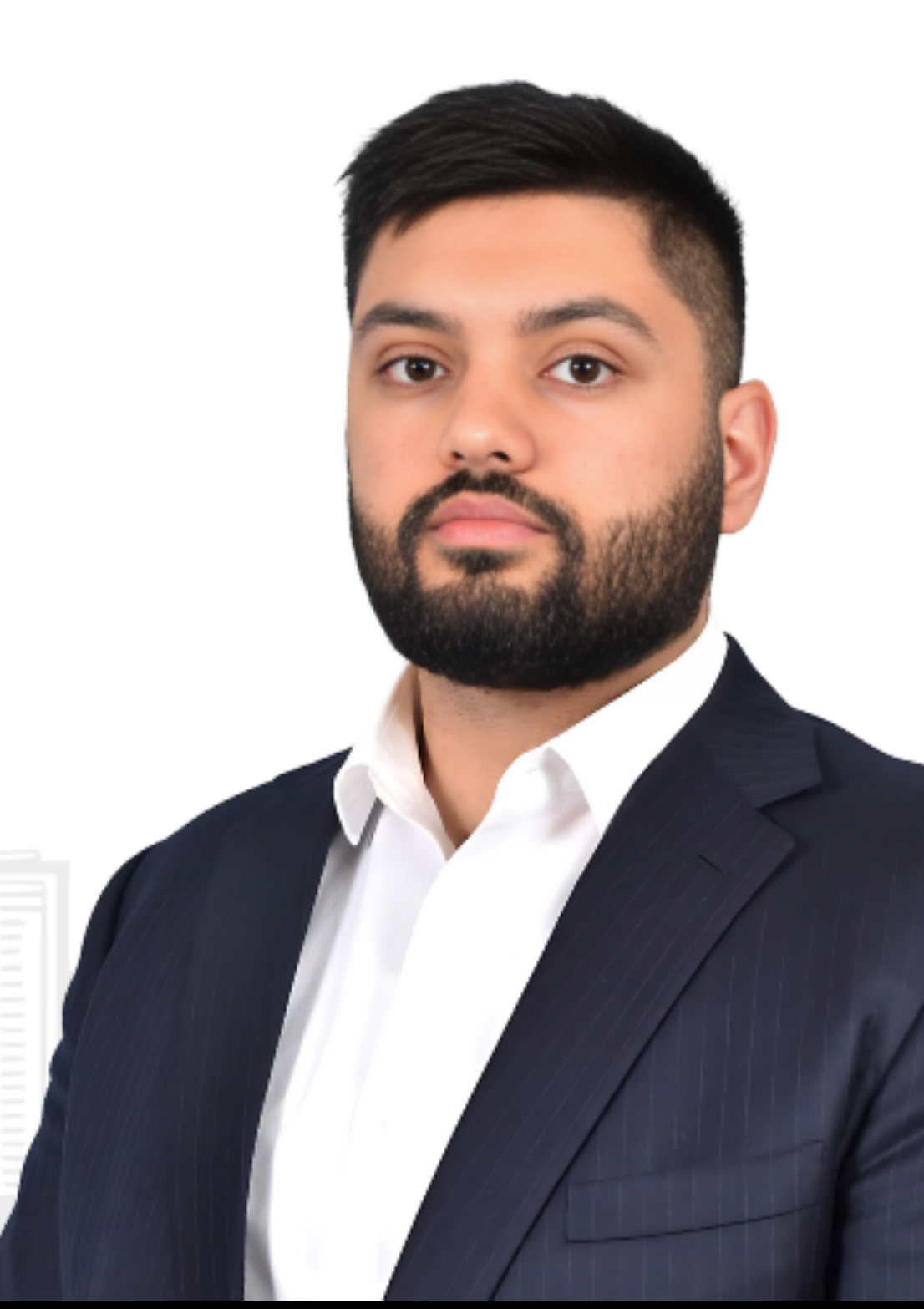
Talk to Nitin — He Knows This Community

Nitin Gadura grew up in and around these communities. He knows which streets are quiet, which schools are improving, which landlords to avoid, and which buildings have no maintenance issues. This is not just his job — it is his neighborhood. Whether you are buying your first home, helping your parents move closer, or looking for a two-family to build wealth together, Nitin will guide you honestly and in your language.

  • Free consultation in English, Hindi, Punjabi, Urdu, Bengali, or Spanish
  • Neighborhood walk-throughs — not just listing printouts
  • Lender and attorney referrals who work with South Asian families
  • Multi-generational purchase guidance — no extra charge, no confusion
  • WhatsApp, call, or text — whatever is easiest for you
  • No pressure, no obligation — just honest guidance from someone who cares
Nitin Gadura
Nitin Gadura
NYS Lic. #10401383405 — Gadura Real Estate, LLC

Request a Free Consultation

Fill in your details and Nitin will reach out to schedule a time that works for your family.

By submitting this form you consent to be contacted by Nitin Gadura of Gadura Real Estate, LLC. Your information will never be sold or shared with third parties.

Request Received

Nitin will be in touch shortly. You can also reach him directly at (917) 705-0132 or WhatsApp.